
Where the Sun Carves the Earth
Enduring places make room for living.
Another early morning.
Another road through darkness toward daybreak.
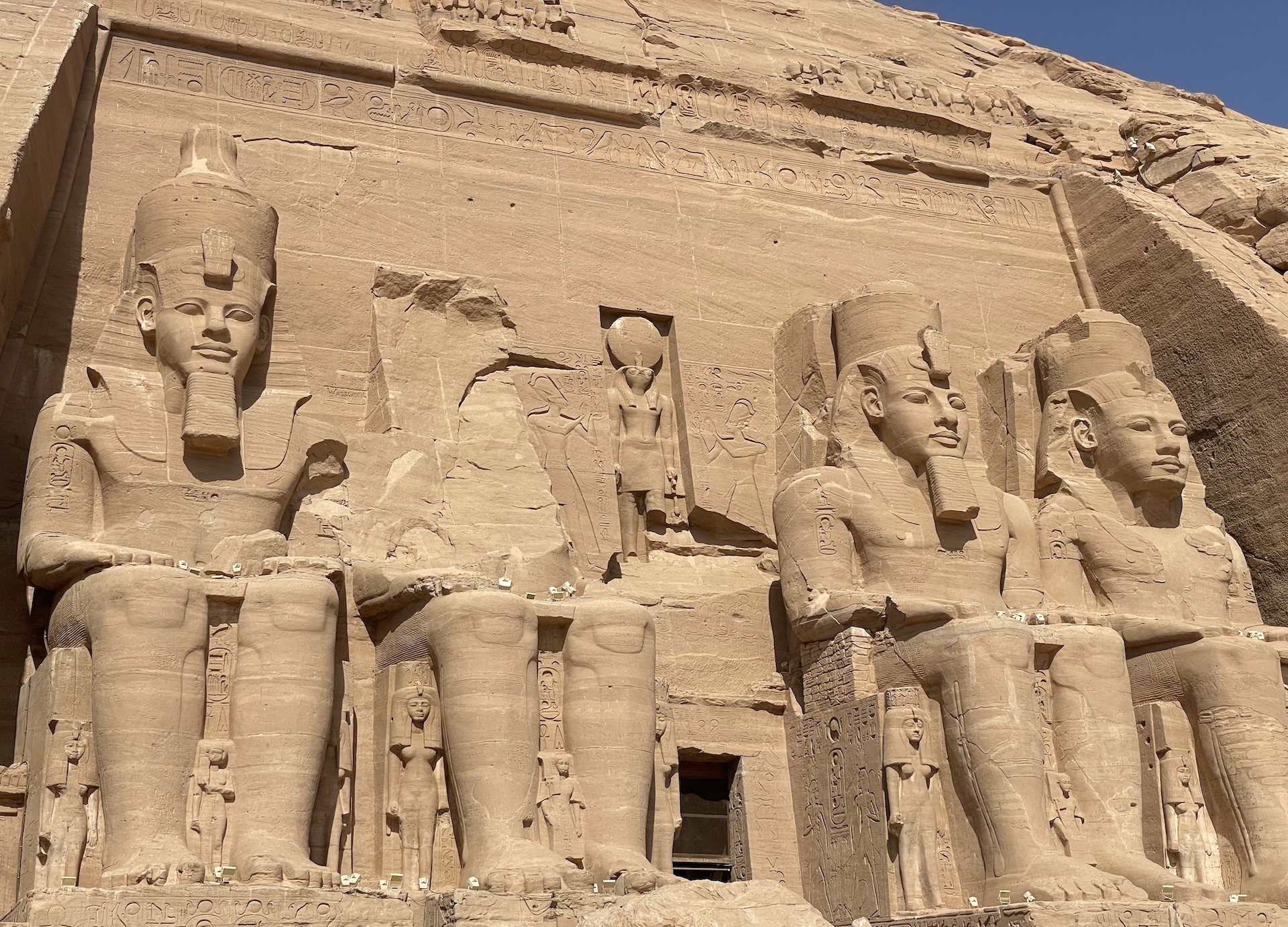
Abu Simbel seemed to emerge from the desert —monumental, symmetrical, carved directly into the rock. The precision unmistakable. These weren’t ruins. They were declarations of power, belief, and engineering held in perfect alignment.
The colossal figures of Ramses II sat unmoving, their gaze fixed forward, set to the movement of the sun. Inside the Great Temple of Abu Simbel, chambers opened one after another. Walls lined with carvings. Stories repeated with intention. It wasn’t force that drew you inward. It was order.
Nearby, theTemple of Hathor and Nefertari carried a different tone—smaller, softer, equally deliberate. Here, power felt expressed through balance rather than dominance.
What stayed with me most wasn’t only the carvings. It was what it took to preserve it. Entire temples relocated, stone by stone, lifted from their original site to escape rising waters. Engineering built for something sacred, done plainly. You could feel the care in the labor.
Across the water, light shimmered. Silence stretched. We made our way into Aswan.
The High Dam marked a different kind of assertion—modern, utilitarian, unmistakably human, built to hold the river. Soon after, we reached Philae Temple by boat, its columns rising gently from the water. Relocated, yet intact. Resting on its island as if it had always belonged there.
As the sun lowered, we crossed again by boat to a Nubian village. Color returned immediately—painted walls, hand-shaped patterns, movement everywhere. Markets carried scent and texture through the air. Camels and scooters sharing the same streets.
A family welcomed us into their home. Hibiscus tea was poured. We sat while stories passed between us.
At one point, I held a baby crocodile—absurd, slightly surreal, oddly tender. Life continuing, unbothered by the weight of history around it.
Darkness settled fully as we returned to the river.