
The Valley of Kings & the Weight of the Invisible
Some histories are felt before they are understood.
The morning began before sunrise—an hour when the desert air still feels almost cool.
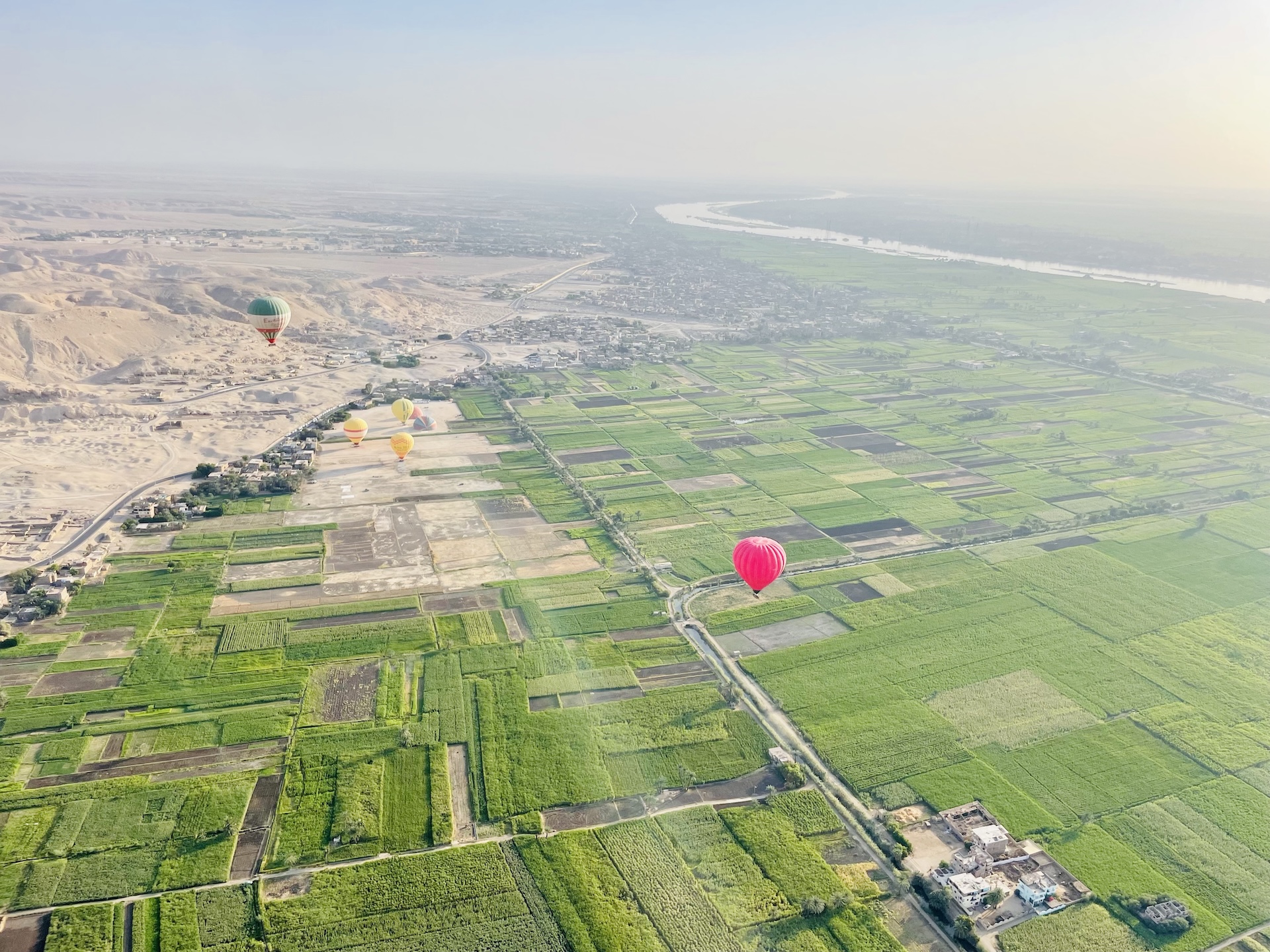
We crossed the Nile by boat, arriving as the hot air balloons over Luxor were being prepared. Fabric spread across the ground like a slow unfurling. Fans humming. Bursts of flame cutting through the dim as balloons filled—each ignition lighting the morning briefly, then fading again. As the sun rose, color followed—not all at once, just enough to reveal shape and movement.
Liftoff was smooth.
No jolt.
Just the ground releasing its hold, then a gradual rise into light.
From above, the West Bank of Luxor unfolded in layers—fields giving way to cliffs, grids drawn by cultivation and time. Balloons drifted at different heights, close enough to hear burners flare, far enough to feel suspended. The valley felt awake in a way it hadn’t from the ground. Active. Breathing.
The Valley of the Kings looked almost arranged from that distance—patterns etched into earth and stone, history reduced to lines and scale.
On the ground, that neatness disappeared.
Inside the tombs, color replaced the muted tones outside. Deep reds, blues, ochres—still vivid after thousands of years— pressed in narrow chambers. Symbols covered walls and ceilings, stacked with intent. Bright detail contained within stone that has endured for millennia. History stopped feeling abstract. It felt physical. Heavy.
In one chamber, a mummy rested behind glass. The space felt compressed. Not dramatic. Just a kind of stillness that asked for silence rather than reaction.
I wanted to linger longer in each space, but heat and confined spaces challenge me. Curiosity met its limit.
At the Temple of Hatshepsut, the day found balance again. The structure blended into the mountain—terraced, composed, built to match the rock behind it. Nothing felt added for effect. Steps in balanced sequence. Columns holding their position. Strength expressed through clarity, design extending from the landscape rather than competing with it.
Our daughter’s questions threaded through everything. She noticed details. Made connections we might have missed. Seeing these places through her attention made the ancient feel newly relevant—less like “the past,” more like something you can still stand beside.